 11
11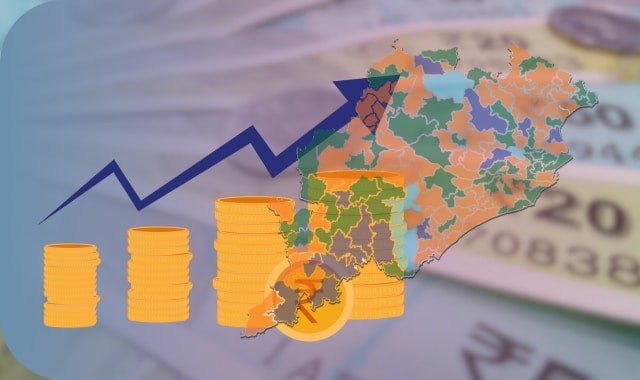
Bhawanipatna : PRAHAR, (Public Response Against Helplesness & Action for Redressal) a policy-focused development organisation working on employment, livelihoods and regional equity, organised a Seminar on “South-West Odisha: Economic & Employment Growth, Challenges and Opportunities” at Hotel Midtown, Bhawanipatna.
The dialogue brought together economists, development practitioners and industry experts to discuss solutions to bridge the widening intra-state developmental disparities in Odisha. The Panel highlighted that Odisha’s substantial mineral reserves, particularly in Kalahandi and Rayagada, represent an underleveraged opportunity for manufacturing-led growth. Greater integration of these resources into downstream industrial activity could support higher GDP contribution, employment creation, and improved value retention within the domestic economy
Speaking at the forum, Dr. Ajaya Mishra, Former Professor of Geography, GM University and Kalahandi University, said, “It is time for all of Odisha to benefit from the Viksit Odisha agenda and align with the Atmanirbhar Bharat 2047 roadmap. When industrial activity is not supported by local clustering, employment remains limited and migration continues. Odisha has a clear opportunity to leverage the world’s second-largest rich Bauxite base, supported by substantial private investments such as refineries, to drive industrialisation and create sustainable livelihoods. Policy must recognise this shift if backward regions are to genuinely catch up.”
Mr Abhay Raj Mishra, President of PRAHAR, said, “India’s past experience demonstrates that prolonged regional intra-state disparities often translate into political and social fragmentation. From Uttarakhand to Jharkhand to Telangana, demands for separate statehood have been rooted in uneven development. Odisha must not treat regional imbalances as a peripheral issue, but as a core development challenge.”
Unlocking the untapped Bauxite Mining alone has the potential to empower 10,000 SMEs and create 2.4 million jobs for the state, accelerating Orissa’s development multifold. Data from the dialogue highlighted that districts such as Kalahandi and Rayagada continue to lag significantly in income and employment indicators. Kalahandi’s per capita income stands at approximately ₹32,000—less than one-fifth of the state average of around ₹1.8 lakh—while nearly 70 per cent of the workforce in South–Western Odisha remains dependent on agriculture, reflecting the absence of non-farm employment engines despite the region’s mineral resource wealth and home to one of the world’s largest Alumina Refineries in the state.
Mr. Ashok Pattnaik, CEO NGO Kartavya said: “Odisha’s challenge is not the availability of resources, but the absence of a structured pathway from mineral Production to local industrial growth.” Mr. Satyanarayan Pattanayak, Founder Secretary, Seba Jagat, said: “Eastern districts are gaining jobs and industries, while western Odisha continues to lag, which is reflected in sharp per capita income gaps within the state. Odisha can close its own gap only by bringing large-scale industrial activity and employment including farm &forest based industries to western districts and different need based Skills training ( including soft skills) for youths & women which growth reaches every region.”
Speakers noted that states that have built integrated industrial ecosystems combining production, fabrication and MSME clusters have seen higher job creation, stronger regional GDP growth and lower migration. In contrast, delays in developing such domestic value chains have a clear macroeconomic cost: limited utilisation of domestic resources increases India’s reliance on imported raw materials, resulting in avoidable foreign exchange outflows and lost value addition at both the state and national levels.