

Bhubaneswar: On the eve of International Mother Language Day, IIT Bhubaneswar organized a talk to commemorate the occasion. Eminent writer, educationist, editor, and political scientist Shri Abhiram Biswal graced the programme as the Chief Guest. The programme was organized to promote awareness of linguistic and cultural diversity and to promote multilingualism, in line with the worldwide celebration as per the UNESCO declaration. This year celebrates the 26th year of International Mother Language Day with the theme “Youth voices on multilingual education”.
In his address, Chief Guest Shri Abhiram Biswal underscored that multilingualism is the need of the hour, as one language enriches and strengthens another, creating a secure ecosystem for all mother tongues. Emphasizing the role of youth, he urged young learners -especially students of technology institutions – to actively use technology to preserve, promote, and revitalize indigenous and regional languages. He cautioned that neglecting one’s mother language amounts to eroding cultural identity and collective wisdom and called for conscious action to prevent linguistic extinction.
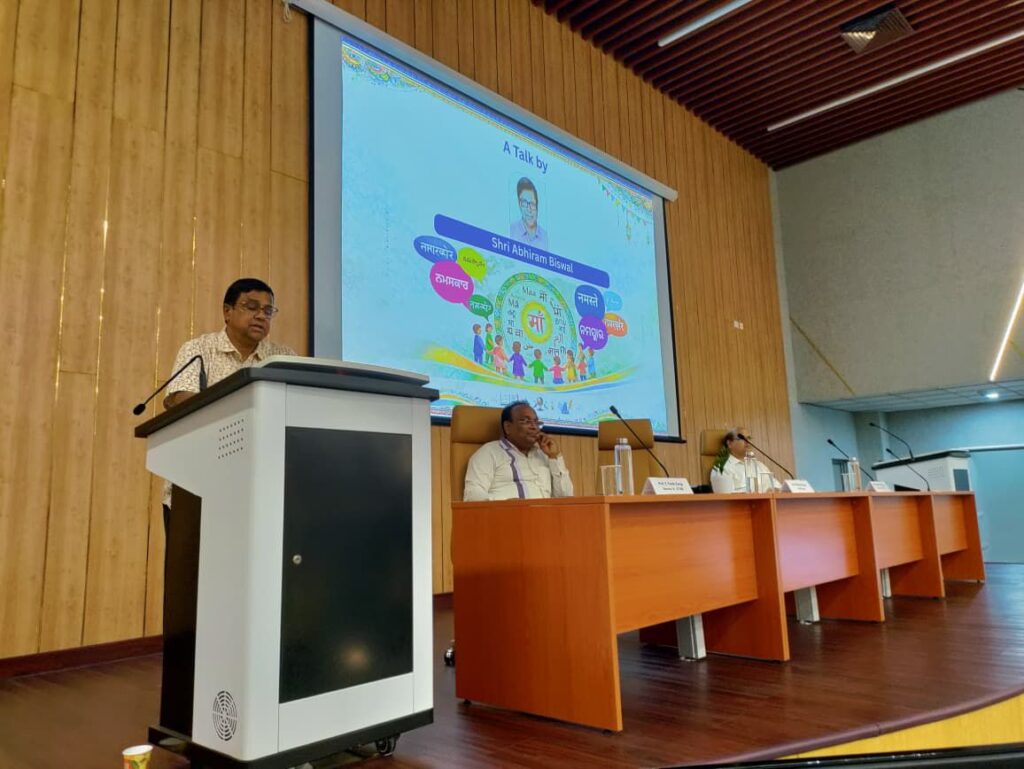
Speaking on the occasion, Prof. V. Pandu Ranga, Dean (Continuing Education) and Director-in-Charge, IIT Bhubaneswar, emphasized that languages are not merely tools of communication but repositories of culture, history, and identity, forming the foundation of inclusive and meaningful education. He noted that in line with the National Education Policy 2020, IIT Bhubaneswar is committed to promoting multilingualism and preserving mother languages as a catalyst for creativity, equity, and deeper learning among future generations.
Shri Bamadev Acharya, Registrar of the Institute, underlined that a mother tongue embodies the essence of a mother-power, beauty, and identity-and carries a unique way of thinking and cultural wisdom. He underscored the collective responsibility to preserve regional and local languages, respect linguistic diversity, and encourage future generations to learn and cherish their mother language.
Employees of the Institute attended the programme in a large number.
