 11
11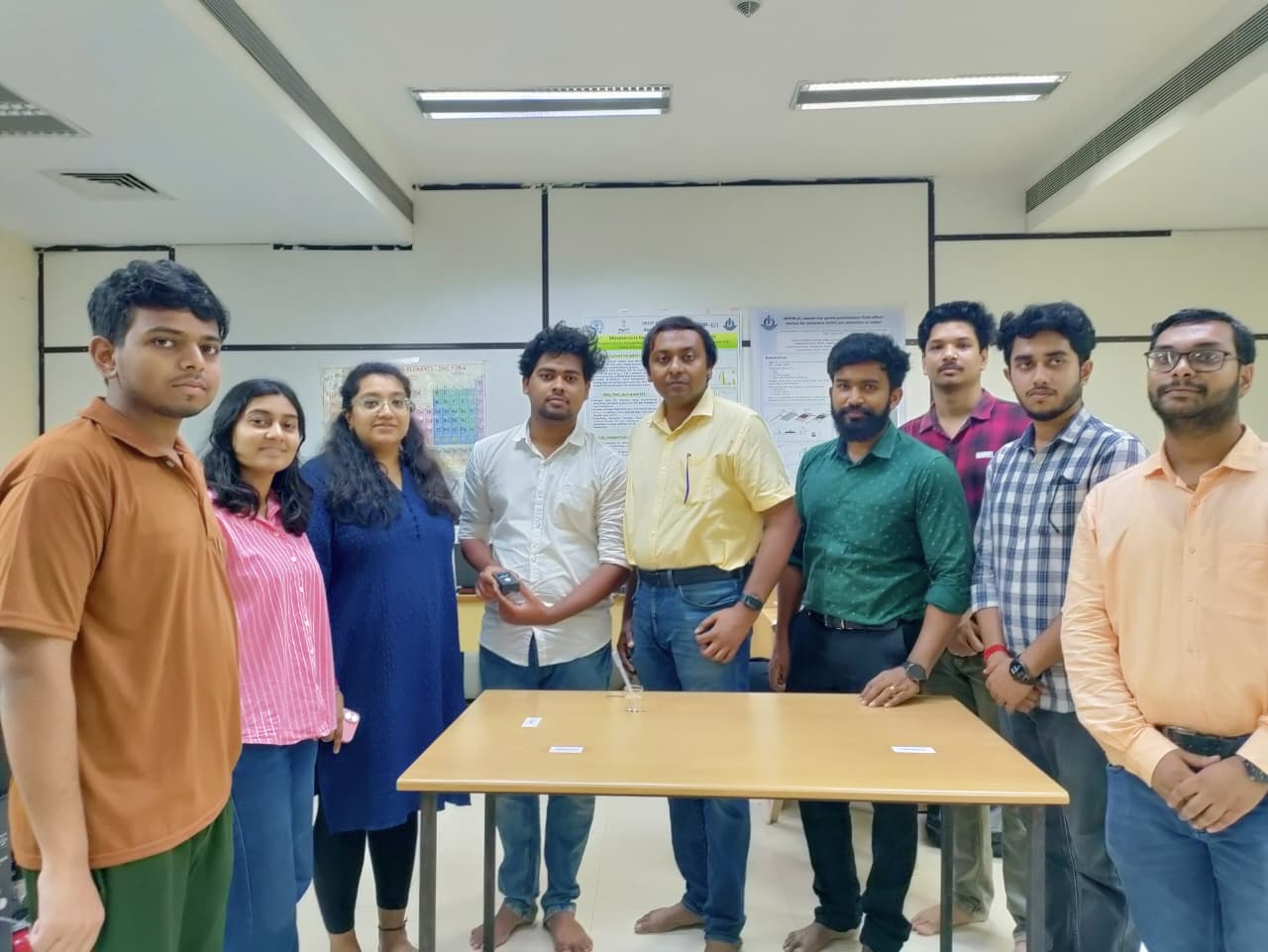
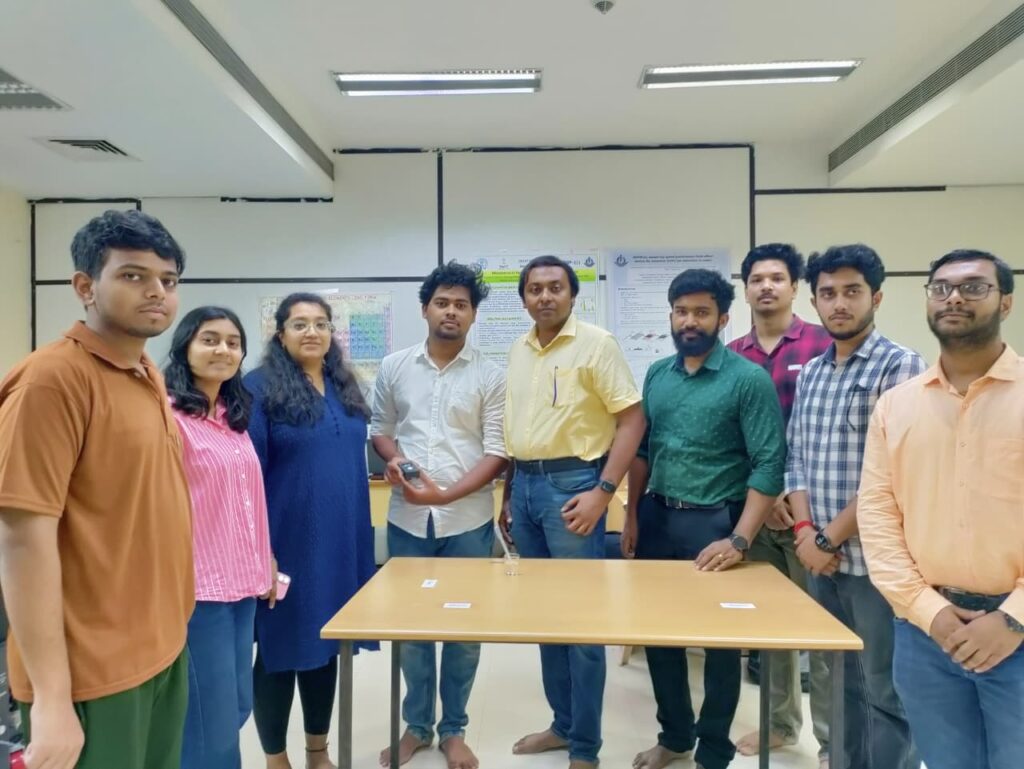
Bhubaneswar, 10th June 2026: Researchers from the Sensors and Spectroscopy Research Group, School of Electrical and Computer Sciences (SECS), Indian Institute of Technology (IIT) Bhubaneswar, led by Dr. Sayan Dey, have made significant advances in arsenic detection technologies aimed at improving water quality monitoring and public health. The research focuses on developing affordable, sensitive, and field-deployable solutions for detecting arsenic contamination in drinking water, which remains a major concern in many parts of India and the world.
Building on their scientific research, the team has developed a compact, portable and hand-held arsenic detection device named “ArsenSafe” through Nano Semic Pvt. Ltd., a startup incubated at the Research and Entrepreneurship Park, IIT Bhubaneswar, led by Dr. Sayan Dey and Dr. Akshay K., faculty members of the Institute. Designed for rapid, cost-effective and on-site testing, ArsenSafe enables accurate arsenic detection without the need for laboratory infrastructure and chemicals, making water-quality assessment faster and more accessible. The handheld device uses an rGO-based sensing device and is designed for easy operation with minimal setup and training. Government agencies, public health departments, environmental monitoring organisations, water treatment providers, industries, NGOs and even individual consumers can deploy it. The current prototype has achieved a sufficiently high Technology Readiness Level (TRL) and has been tested on the water sample from the IIT campus and adjacent areas.
In a recent article published in ‘Environmental Science: Nano’ of the Royal Society of Chemistry (RSC), the team comprising Dr. Sayan Dey, Arijit Pattra, Bathula Sathwik and Dr. Himanshu P. Padole, presented an advanced micro sensor based on reduced graphene oxide (rGO) and its derivatives to detect extremely low levels of arsenic in consumable water complying with the World Health Organization safety recommendations. It demonstrated a significant contribution towards improving human health and sanitation by carefully blending nanotechnology and machine learning. The Editorial Board of ‘Environmental Science: Nano’ has invited the article to be featured in its special themed collection on “Nanosensing,” recognising the significance of the work.
The recognition from the Royal Society of Chemistry and the development of ArsenSafe together highlight IIT Bhubaneswar’s growing contribution to nanotechnology-driven environmental monitoring and its efforts to address critical societal challenges through research and innovation.
Link of the Paper: https://pubs.rsc.org/en/content/articlehtml/2020/zp/d5en01060h