

Bhubaneswar, 10th January, 2026 : Day Three of the 12th Kalinga Literary Festival (KLF) 2026 unfolded as a rich confluence of ideas, languages, cultures and narratives, reaffirming the festival’s stature as one of South Asia’s most inclusive and intellectually vibrant literary platforms. Hosted at Mayfair Convention and Mayfair Lagoon, Bhubaneswar, the day brought together eminent writers, thinkers, policymakers, artists, historians, filmmakers and poets from India and abroad for an immersive engagement with literature, society and the future of ideas.
The day commenced with reflective and deeply moving sessions such as “Lasting Legacy of a School Teacher”, featuring P.K. Dash, Prof. Abhiram Biswal, Prof. Kishore Basa, Prof. Jatin Kumar Nayak and Jugal K. Das, celebrating the transformative role of educators in shaping generations. Parallelly, former IPS officer and bestselling author Amit Lodha spoke on “Life and Literature in Khaki” in conversation with Lalit Kumar, offering insights into ethics, governance and storytelling from lived experience.
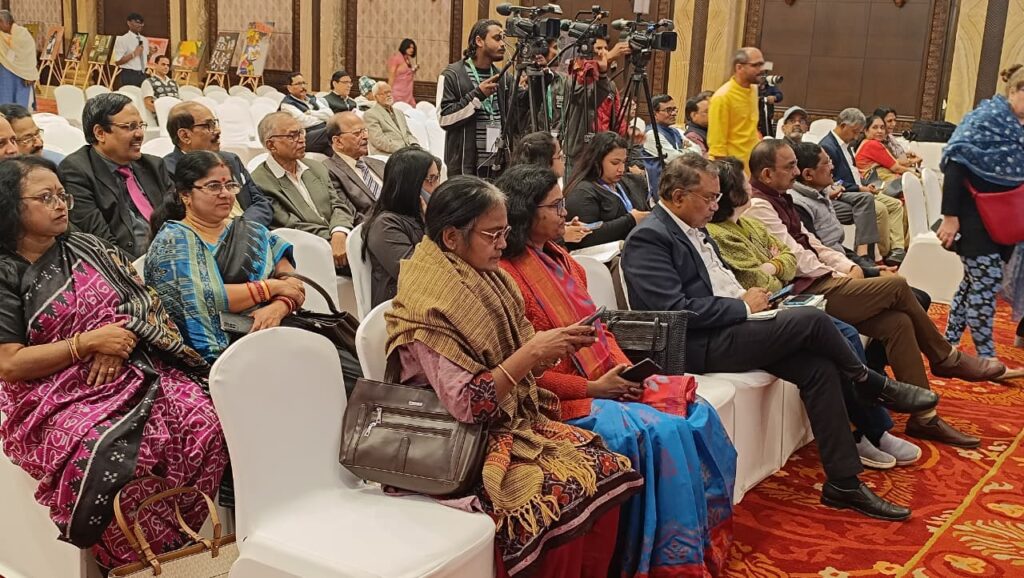
Literary traditions and contemporary voices found resonance in sessions like “Hindi Kavita ki Bhao Bhumi” with Geet Chaturvedi and Yash Malviya (moderated by Yunus Khan), and “Stories in the Time of AI: The Future of Literature”, where Barsali Bhattacharya, Sonali Prasad and Vandana Vasudevan examined creativity in the age of artificial intelligence.
Multilingualism and cross-cultural exchange remained at the heart of Day Three. Deepa Bhasthi in conversation with Kanishka Gupta discussed “Bridging Languages: Writing for the World”, while sessions such as “Globalization of Nepali Literature” brought together Ranjana Niraula, Rohini Rana, Rupa Jha, Suman Barsha and Birat Anupam under the moderation of Dhirendra Premrishi. A significant international highlight was “Sri Lanka and Kalinga: A Shared Heritage”, featuring Dr. Upali Pannilage in conversation with Jatin Nayak and Prabir Patnaik, underscoring centuries-old civilisational and cultural ties.
Women’s voices and narratives were foregrounded powerfully through sessions like “Words Without Walls: Women, Culture, and the World Through Their Stories” with Daisy Rockwell, Deepa Bhasthi, and Lakshmi Puri; “Utkalika: Odia Katha Ka Stree Swar”, bringing together leading Odia women writers including Sarojini Sahu, Jayanti Rath, Paramita Satpathy, and others; and “Women Protagonists: Rethinking Indian Literature” featuring Koral Dasgupta, Monalisa Jena and Swati Pandey.
Public policy, global transitions, and social change were discussed in thought-provoking conversations such as “Everything All At Once: India and the Six Simultaneous Global Transitions” with Dr. Rajiv Kumar, “She Leads” featuring Pooja Ray, Tanaya Patnaik, Sofia Firdaus, and Swati Pandey, and “Building Cultural Institutions: Memory, Meaning, and Modernity” with Ranjit Hoskote, Kuladhar Saikia, K.K. Gopalakrishnan and Jaiprakash Pandey.
Cinema, media, and contemporary storytelling found expression in sessions like “The Filmmaker as Public Intellectual” with Sudhir Mishra, “Newsrooms to Narratives” featuring Chitra Subramaniam, Tanaya Patnaik and Birat Anupam, and “Cinema with a Purpose: Films that Shape Change” with Nila Madhab Panda and Sabyasachi Mohapatra.
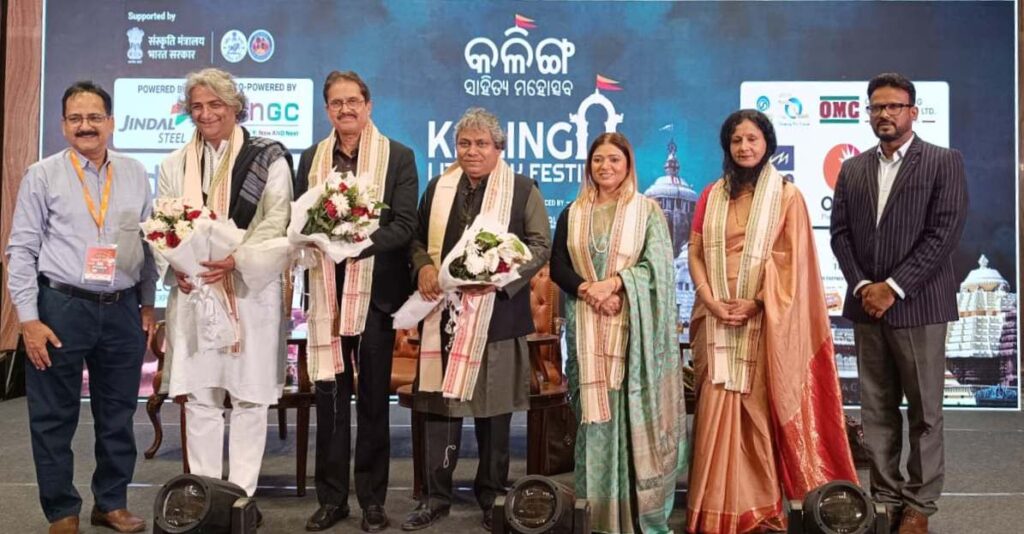
The evening came alive with soulful verses and rhythmic applause as the stage was graced by a stellar lineup of maestros, featuring Azhar Iqbal, Madan Mohan Danish, Mumtaz Naseem, Rashmi Saba, and Shakil Azmi, for a special Hindi Mushaira.
The evening resonated with cultural depth through poetry, music, and performance, including Mushaira featuring Azhar Iqbal, Madan Mohan Danish, Mumtaz Naseem, Rashmi Saba and Shakil Azm, along with multiple multilingual poetry sessions that reflected India’s and South Asia’s diverse literary soul.
Reflecting on the significance of Day Three, KLF Founder & Director Rashmi Ranjan Parida said, “Day Three of KLF 2026 truly reflects what the festival stands for – dialogue without borders, respect for linguistic diversity and the courage to engage with both tradition and the future. About more than 70 specially curated sessions were organised in last two days. These sessions are not just literary; they are deeply civilisational.”
KLF Patron & CEO Ashok Kumar Bal added, “Kalinga Literary Festival has always aspired to be a meeting ground of ideas, cultures, and generations. The extraordinary range of sessions and voices on Day Three shows how literature continues to shape public thought, social conscience and our collective imagination.”
With its seamless blend of literature, policy, culture and creativity, Day Three of KLF 2026 stood as a powerful testament to the festival’s role in nurturing inclusive dialogue and intellectual exchange. The festival continues through January 11, 2026, with more sessions celebrating stories, ideas and voices from across the world.
